
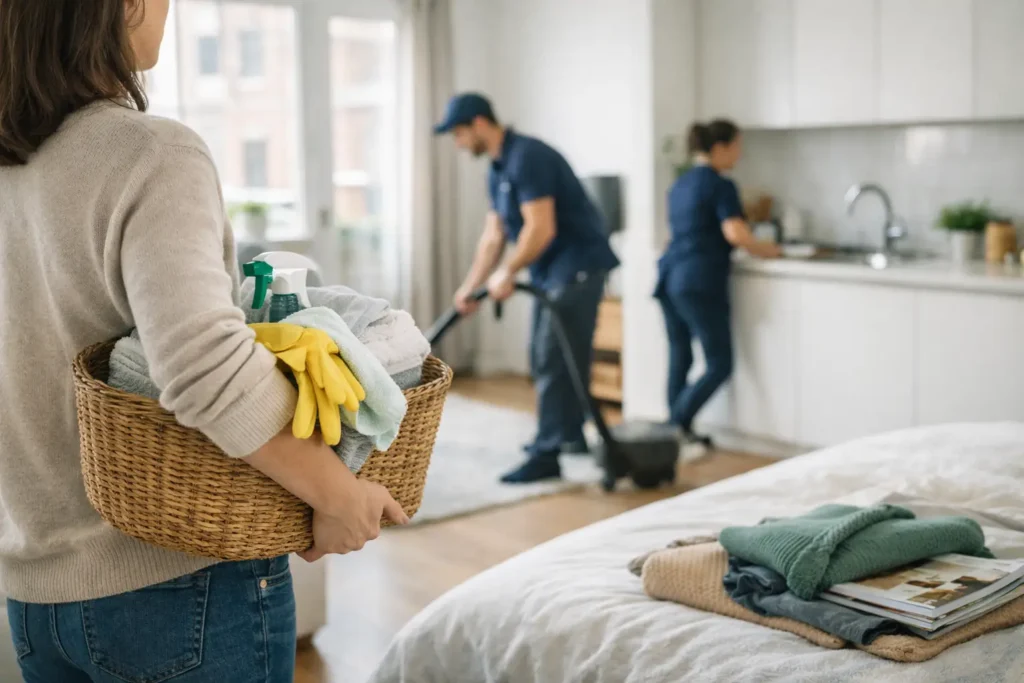
If your cleaners are due in a few hours and the place still looks lived-in, that is normal. The question is not whether your home or property is already tidy enough. It is how to prepare for cleaners in a way that gives them clear access, saves time on the day, and helps the visit deliver the standard you expect.
Preparation does not mean pre-cleaning. A professional cleaner should arrive ready to work, with a clear scope and a methodical approach. What helps most is practical preparation: removing avoidable obstacles, flagging priority areas, and making sure the team can focus on cleaning rather than guessing, waiting, or moving around personal clutter.
Why preparation matters before a professional clean
A well-prepared property is easier to clean thoroughly. That matters whether you have booked a regular domestic clean, an end of tenancy clean, an after builders clean, or a one-off deep clean before guests arrive. When cleaners can reach surfaces, floors, appliances, bathrooms, and high-use areas without delay, the result is usually more consistent.
This is especially important for inspection-led cleans. If a landlord, letting agent, property manager, or incoming tenant will be assessing the property, small oversights can become bigger issues. Items left in cupboards, worktops full of appliances, or rooms crowded with boxes can limit access and leave areas partially cleaned. The standard may still be good, but the finish will not be as complete as it could have been.
For busy households, the benefit is simpler. Good preparation reduces back-and-forth on the day. It also helps set expectations clearly, which is often the difference between a smooth service and an avoidable misunderstanding.
How to prepare for cleaners without wasting your own time
The best approach is to prepare for access, not to do the job twice. You do not need to mop the floors before a floor clean or scrub the bathroom before a bathroom clean. What you should do is make sure the areas included in the visit are available to clean.
Start with clutter. If clothing, paperwork, toys, cables, or shopping bags are spread across floors and surfaces, cleaners will either need to work around them or spend time moving them carefully. In a home, that can reduce the time available for actual cleaning. In a rental property, it can affect whether the cleaner can reach all expected areas.
Valuables and sensitive items should be put away in advance. Jewellery, cash, passports, important documents, medication, and fragile keepsakes are better stored securely before the appointment. This is partly for peace of mind and partly for practicality. A clear surface is faster and safer to clean than one filled with delicate or personal items.
If pets are in the property, decide in advance how they will be managed. Some pets are completely relaxed around cleaning teams, while others become stressed by equipment, movement, or unfamiliar people. Keeping pets safely in one room or arranging for them to be out during the visit can make the service more efficient and more comfortable for everyone.
Focus on the areas that affect the result most
Not every property needs the same preparation. A weekly domestic clean in an occupied house is different from an end of tenancy clean in an empty flat. The right preparation depends on the type of service and the outcome you need.
For domestic cleaning
In a lived-in home, the biggest time-saver is surface clearance. Kitchen worktops, bathroom ledges, bedside tables, and living room floors should be as open as possible. If the cleaner is expected to dust and wipe surfaces, those surfaces need to be reachable.
Laundry is worth handling in advance as well. Clothes piled on beds or floors can slow access to key areas. You do not need everything perfectly arranged, but a quick tidy helps the cleaner get straight to the task.
If there are rooms you do not want cleaned, mention that clearly before the appointment or on arrival. The same applies if you want more attention paid to one or two areas, such as the kitchen, bathrooms, or entrance hall.
For end of tenancy cleaning
This is where preparation becomes more exact. If the property is due for inspection, it should usually be emptied before the clean begins unless otherwise agreed. Cleaners need full access to floors, skirting boards, cupboards, appliances, bathroom fixtures, and internal glass where included in the service scope.
Defrosting the freezer in advance is often necessary if appliance interiors are part of the booking. If the freezer is still iced over when the team arrives, that can limit what can be completed safely within the appointment window. The same principle applies to cupboards, drawers, and wardrobes. They should be emptied so internal cleaning can be carried out properly.
Utilities also matter. Water and electricity should be available on the day. It sounds obvious, but in move-out situations, services are sometimes disconnected too early. Without access to water, lighting, or power where needed, cleaning standards can be affected.
For after builders or renovation cleaning
Dust travels further than most people expect. Before cleaners arrive, make sure the building work has finished and that contractors have removed tools, materials, protective coverings, and waste. Professional cleaners can deal with fine dust and post-work residue as part of the service, but they should not be working around active trades or leftover rubble.
If any surfaces are newly installed or newly painted, it helps to mention that. Some materials need careful handling, and clear communication protects the finish as well as the cleaning outcome.
Access, instructions, and timing
One of the most overlooked parts of how to prepare for cleaners is simple access. If the team cannot get in on time, the whole appointment becomes less efficient. For houses, that may mean making sure someone is in, leaving agreed access instructions, or ensuring entry systems work properly. For flats and managed buildings, it may also mean notifying concierge staff or arranging lift access in advance.
Parking and loading can also affect timing in London. If there are restrictions, controlled access points, or estate rules, mention them before the visit. This helps avoid delays and keeps the service running to schedule.
Clear instructions are just as useful as physical access. If there are priority rooms, problem areas, fragile finishes, or exclusions, say so at the start. A professional cleaning service works best when expectations are specific. “Please focus on the limescale in the en suite” is more helpful than “just do the usual”.
It is also sensible to mention anything unusual about the property. That might include a stiff window catch, a faulty tap, a loose cupboard door, or an alarm that could be triggered. These details help the cleaners work safely and avoid disruption.
What not to do before cleaners arrive
Over-preparing can be almost as unhelpful as not preparing at all. You do not need to spend your morning scrubbing surfaces that are about to be professionally cleaned. That usually adds stress without improving the final result.
It is also best not to leave vague instructions or change the scope halfway through unless necessary. If the team has been booked for a specific service, changing priorities on the day can affect what gets completed. It is better to agree the scope clearly in advance and then raise any key concerns at the start.
Another common mistake is leaving personal storage areas full but expecting internal cleaning. If you want inside cupboards, drawers, or appliances cleaned, they generally need to be emptied first. Otherwise, access is limited and the result may not meet inspection expectations.
A simple pre-clean checklist that genuinely helps
A short check before arrival is usually enough. Put away valuables and personal paperwork, clear floors and main surfaces, empty any areas that need internal cleaning, and make sure the team can enter the property without delay. If pets, parking, or building access need planning, sort those in advance.
Then communicate the priorities clearly. That is often the most useful step of all.
For customers who want a dependable result rather than guesswork, a checklist-led service makes preparation easier because the scope is already clear. That is one reason many London clients choose providers such as Premium Cleaners for homes, rental properties, and inspection-ready move-outs. When the service standard is defined properly, your preparation becomes simpler too.
The real goal is to make cleaning time count
The best preparation is not about making the property look clean before the cleaner arrives. It is about removing friction. When access is clear, expectations are agreed, and the right areas are ready to be worked on, the appointment is more likely to deliver the standard you booked for.
If you are wondering how much preparation is enough, use this rule: clear what blocks the clean, secure what is personal, and communicate what matters most. That gives your cleaners the best chance to do their job properly and gives you a far better chance of getting the result you need.