
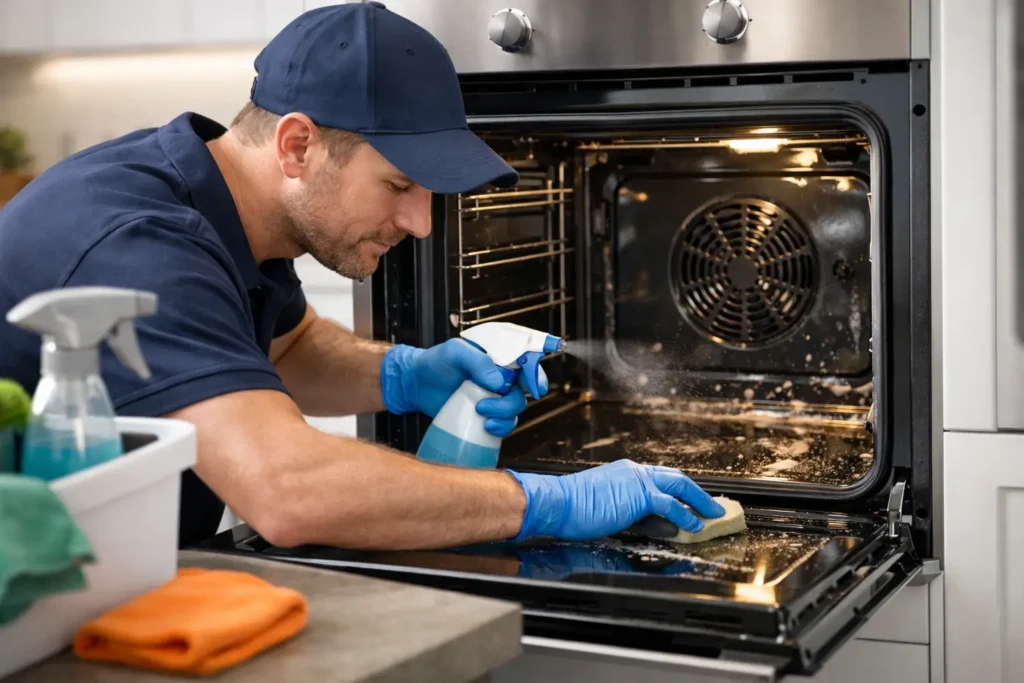
Burnt-on grease has a way of becoming invisible until the oven starts smoking, cooking smells linger, or an inventory clerk opens the door during a checkout inspection. At that point, a professional oven cleaning service stops being a nice-to-have and becomes the fastest route back to a usable, presentable kitchen. For homeowners, tenants, landlords and commercial clients, the real question is not whether the build-up matters. It is whether you want to spend hours on it yourself, with uncertain results, or hand it to trained cleaners who know how to return the appliance to a proper working standard.
What a professional oven cleaning service actually covers
A good service should be far more than a quick wipe over visible surfaces. The work needs to be structured, methodical and clear in scope. That matters because ovens collect grease in awkward places – around door seals, inside racks, on internal glass panels and across trays where repeated use bakes residue into the metal.
In most cases, a professional oven cleaning service includes the deep cleaning of the oven interior, door, removable racks, trays and panels, along with degreasing key surfaces and removing carbon build-up where possible. If the appliance type allows for it, components may be taken out for soaking and cleaned separately before being reassembled. The aim is a hygienic, visibly improved finish, not a rushed cosmetic pass.
There is also a practical reason to expect a checklist-led approach. Different appliances need different handling. A single built-in oven, a range cooker and a compact office kitchenette oven all present different access points, materials and levels of residue. Clear scope helps avoid confusion on the day and gives the customer confidence that the work has been planned properly.
Why DIY often falls short
Many people start with supermarket degreasers, bicarbonate of soda mixtures or a scraper bought in frustration after a smoky roast. Sometimes that is enough for light maintenance. More often, it turns into a long job with uneven results.
The main issue is not effort alone. It is reach, product choice and patience. Burnt grease tends to cling to corners, hinges and internal glass where household cleaning methods struggle. Some products are too mild to shift the build-up, while stronger ones can be unpleasant to use in enclosed kitchens and easy to misuse on delicate finishes.
There is also the time factor. A proper oven clean can take hours once soaking, scrubbing and repeated wiping are involved. For busy households, landlords between tenancies or offices trying to avoid disruption, that time cost matters. Professional cleaners arrive with a process already established, which usually means better consistency and less trial and error.
When booking a professional oven cleaning service makes the most sense
Timing often matters as much as the clean itself. If you leave an oven until the residue is severe, the job becomes harder and the result can depend on the age and condition of the appliance. Booking earlier usually leads to a better finish and less risk of lingering odours or smoke.
For tenants, the obvious trigger is end of tenancy cleaning. Ovens are one of the first areas checked during inventory inspections because they show use quickly. A greasy door, dirty racks or burnt residue inside the cavity can undermine an otherwise well-presented kitchen. Landlords and letting agents notice that.
For homeowners, it often comes down to routine maintenance or preparing for guests. If the oven is used heavily, especially for roasting, batch cooking or frequent family meals, grease can build up faster than expected. In those cases, periodic professional cleaning is less about appearance and more about keeping the appliance pleasant and practical to use.
Commercial settings have another pressure point: presentation and hygiene. Staff kitchens, small hospitality sites and office break areas still reflect on the business. A neglected oven in a shared space can create complaints quickly, particularly where multiple people use it and no one takes ownership of cleaning it thoroughly.
What to expect on the day
A reliable provider should make the process straightforward. That starts before arrival, with clear communication about what is included, how long the visit is likely to take and whether any appliance parts need to cool beforehand. Vague promises are rarely a good sign.
On the day, the cleaner should assess the appliance condition, protect surrounding areas as needed and work through the agreed scope in a controlled order. Removable components are usually handled first, followed by internal surfaces, doors and finishing details. The difference between amateur and professional work often shows in these details – edges, glass, racks and the overall standard of reassembly.
The kitchen does not need to be immaculate before the appointment, but access should be clear. If the oven is built into tight cabinetry or the area is crowded with cookware, a little preparation helps the cleaner work safely and efficiently.
How to judge quality in a professional oven cleaning service
The market is full of low-cost promises, but price alone tells you very little about service standards. If you are comparing providers, focus on accountability. Are the cleaners vetted and insured? Is the scope of work clearly explained? Is there any form of guarantee if the result falls short of the agreed standard?
Consistency matters more than slogans. A dependable professional oven cleaning service should be delivered through a repeatable process, not whatever a technician decides on the day. That is especially important for landlords, property managers and commercial clients who may be booking repeatedly across different addresses.
It also helps to look for a service model built around managed expectations. Some staining, wear or discolouration may be permanent, particularly in older ovens. A professional company should be honest about that rather than promising a factory-new finish in every case. Clear service language is a sign of competence, not caution.
For London customers, local coverage matters too. A provider working solely within London is often better placed to respond promptly, manage bookings across boroughs and maintain operational consistency. That can be useful when timings are tight, such as pre-tenancy turnarounds, planned inspections or office cleaning schedules.
Professional oven cleaning service for homes, rentals and workplaces
The same service category solves different problems depending on the property type. In owner-occupied homes, the focus is usually convenience, hygiene and restoring an appliance that has become unpleasant to use. Families and working professionals often book because they want the job done properly without losing half a day to scrubbing racks in the sink.
In rental properties, the pressure is more administrative. A dirty oven can delay handovers, trigger disputes over cleaning standards or create extra work just as keys are due to change hands. Here, a professional oven cleaning service supports inspection-readiness and helps reduce avoidable friction between tenants, landlords and agents.
For workplaces, the value is often about maintaining standards with minimal disruption. Shared kitchens are easy to neglect because the responsibility is spread across multiple people. Bringing in professional cleaners restores order quickly and gives office managers one less issue to chase.
Why clear scope and guarantees matter
One of the biggest frustrations in cleaning services is mismatch between expectation and delivery. A customer books what sounds like a deep clean, only to discover that key parts were excluded or the result is not checked properly. That is why service clarity matters so much.
A company such as Premium Cleaners positions its work around checklist-led execution, transparent inclusions and a 48-hour re-clean guarantee. That kind of structure gives customers a more reliable basis for booking because the service is tied to standards and accountability, not vague marketing language. For anyone coordinating a property deadline, that reassurance is valuable.
It also reduces the risk of false economy. A cheaper booking can become expensive if the result needs correcting, the appliance still fails inspection, or the customer has to arrange another visit elsewhere. Paying for dependable workmanship usually saves time and hassle overall.
Choosing the right service without overcomplicating it
You do not need a lengthy procurement exercise to book an oven clean well. You need a provider that is clear, responsive and able to explain exactly what will happen. Ask what is included, whether cleaners are insured, how results are quality-checked and what happens if you are not satisfied.
If the answers are direct and consistent, that is usually a good sign. If the pricing is vague, the scope keeps shifting or no one will confirm aftercare, it is worth being cautious. Cleaning services work best when expectations are clear on both sides.
A professional oven clean is one of those jobs that earns its value quietly. The kitchen feels better, the appliance is easier to use, and there is less chance of awkward surprises during a viewing, inspection or busy weeknight meal. Sometimes the most useful service is simply the one that removes a recurring problem properly – and lets you stop thinking about it.