
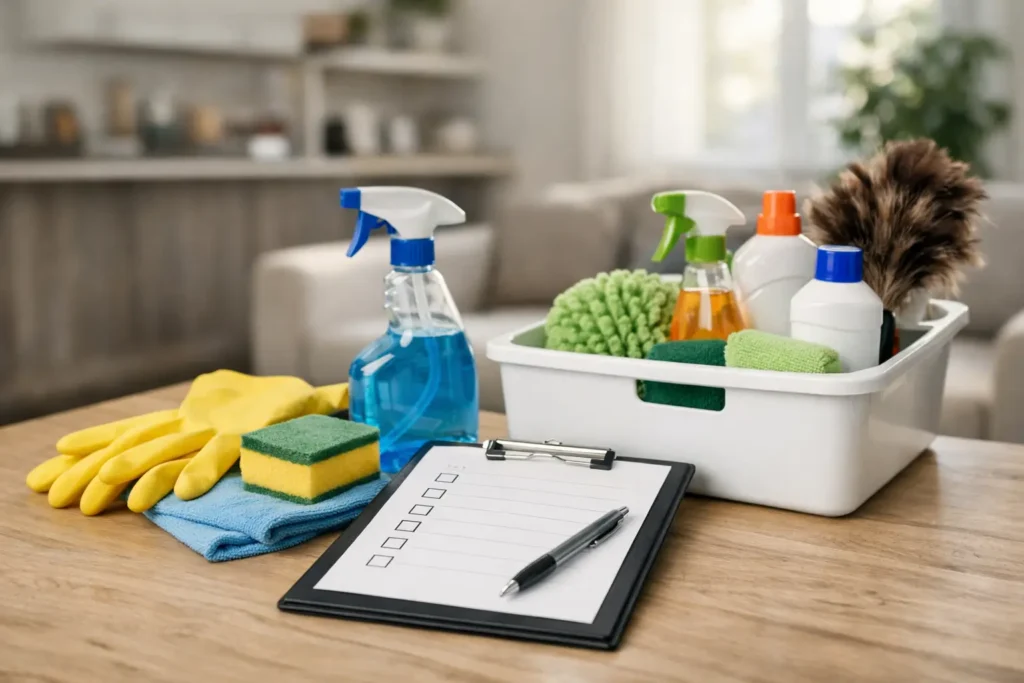
A missed skirting board or smeared bathroom mirror can make an otherwise clean home feel unfinished. That is why a residential cleaning checklist template matters. It turns cleaning from a vague task into a clear standard, which is exactly what homeowners, tenants, landlords and property managers need when results have to be consistent rather than approximate.
A good checklist does more than remind someone to vacuum or wipe surfaces. It defines scope, sets expectations and reduces the common problem of different people interpreting “clean” in different ways. In a busy London household or rental property, that clarity saves time and avoids repeat visits, complaints and last-minute corrections before an inspection or handover.
What a residential cleaning checklist template should do
The best residential cleaning checklist template is practical, room-based and specific enough to be measured. “Clean kitchen” is too broad to be useful. “Wipe cupboard fronts, disinfect worktops, clean sink and taps, mop floor edges and centre” is far more effective because it can be checked properly once the work is done.
This is especially important where accountability matters. A landlord preparing for new tenants, a tenant aiming to protect a deposit, or a homeowner arranging regular domestic cleaning all need the same thing – clear scope, no surprises. A checklist provides that structure.
It also helps separate routine cleaning from deep cleaning. That distinction matters because not every visit includes descaling shower screens, degreasing extractor fans or wiping the tops of doors. If those tasks are expected, they should appear on the checklist. If they are excluded, that should be clear as well.
Why checklists matter in residential cleaning
Cleaning standards tend to slip when there is no written process. One cleaner may focus on visible surfaces, while another works methodically through detail areas. Without a checklist, the result depends too heavily on individual habits. With one, the standard becomes more consistent across each visit and each property.
For domestic clients, that means less time explaining preferences every time a cleaner attends. For landlords and letting agents, it means a better chance of presenting the property in inspection-ready condition. For families managing a full schedule, it removes the need to supervise every task or check every room from scratch.
There is also a practical point around time. A checklist helps cleaners work in a logical order rather than doubling back. That improves efficiency, but it only works if the list is realistic. A one-hour clean cannot cover the same scope as a full end of tenancy appointment, and any template worth using should reflect that.
A room-by-room residential cleaning checklist template
Below is a workable residential cleaning checklist template that can be adapted for routine weekly cleaning, fortnightly visits or more detailed one-off appointments.
Entrance, hallways and stairs
Dust accessible surfaces, light switches and skirting boards. Wipe marks from internal doors where needed. Vacuum carpets, rugs and stair edges, or mop hard flooring thoroughly. Check corners for dust build-up and remove cobwebs from reachable areas.
In high-traffic homes, this area often affects first impressions more than any other. It is also one of the easiest spaces to overlook because the focus tends to go to kitchens and bathrooms first.
Living room and dining area
Dust furniture, shelves, picture frames, window sills and accessible ledges. Wipe tables and hard surfaces. Vacuum upholstered furniture where required, including under cushions if this is within scope. Vacuum carpets or rugs and mop hard floors.
If the room is heavily used, pay attention to touchpoints such as remote controls, door handles and switches. For regular cleaning, decorative items may be dusted around. For a more thorough clean, they should be lifted and cleaned underneath.
Kitchen
Wipe cupboard exteriors, worktops, splashbacks and tiled surfaces. Clean sink, taps and draining area. Wipe outside of appliances including fridge, microwave, dishwasher and oven exterior. Clean hob surface and remove light grease. Empty bin area if included, then vacuum and mop the floor.
This is one of the main areas where scope must be defined properly. Internal oven cleaning, fridge interiors and heavy degreasing are often separate services, not standard inclusions. A checklist should make that distinction clear so there is no misunderstanding.
Bedrooms
Dust furniture, bedside tables, wardrobes externally, mirrors, accessible shelves and window sills. Make beds or change linen if agreed. Vacuum carpets or mop hard floors, including under beds where access allows. Wipe handles and switches.
Bedrooms can look tidy without actually being clean, so the checklist should focus on surface care and floor coverage rather than appearance alone. If clutter prevents access, that should be noted rather than worked around inconsistently.
Bathrooms and cloakrooms
Clean and disinfect toilet, sink, taps, bath, shower fittings and visible pipework. Wipe tiles, mirrors, glass and bathroom surfaces. Remove soap residue where possible and mop the floor carefully, especially around the toilet base and corners.
Bathrooms are where standards become most visible. Water marks, leftover limescale and missed edges are noticed immediately. In London properties with hard water, descaling may require more time and should not be treated as a minor add-on.
How to adapt the template to the property
Not every home needs the same checklist. A one-bedroom flat used by a single occupant has very different demands from a five-bedroom family house or a rental property between tenancies. The right approach is to start with the room-by-room structure and then adjust for frequency, occupancy and condition.
For regular domestic cleaning, the checklist should prioritise repeatable maintenance tasks that keep the property presentable week to week. For an end of tenancy clean, the template needs to go further into detail areas such as inside cupboards, behind freestanding appliances, internal windows and built-up grime.
Condition matters just as much as size. A well-kept home may only need maintenance cleaning. A property that has been vacant, recently renovated or poorly maintained may need a deep clean or after builders clean with a much more detailed checklist. Using one template for all scenarios creates the very inconsistency most clients are trying to avoid.
What to include beyond room tasks
A useful residential cleaning checklist template should not stop at room headings. It should also include service details that prevent disputes later. This means recording the date, property address, visit type and any agreed exclusions.
It is also sensible to note access limitations. If a cleaner cannot move heavy furniture, reach high areas safely or clean a room fully because of storage or occupancy, that should be documented. Clear exclusions protect both sides and keep expectations aligned.
For managed properties, sign-off is equally valuable. A completed checklist can act as a service record, showing what was covered and highlighting anything that needs further attention. That is particularly useful for landlords, letting agents and property managers who need cleaning that stands up to scrutiny.
Common mistakes when using a cleaning checklist
The most common problem is making the checklist too vague. If tasks are not specific, the list becomes a comfort rather than a control. The second problem is making it too long for the booked time. A checklist should support delivery, not create a standard that cannot realistically be achieved.
Another mistake is failing to separate routine tasks from occasional detail cleaning. Skirting boards, internal cupboards, limescale removal and appliance interiors may not need attention on every visit, but if they are never assigned to a schedule, they get missed until the property feels noticeably below standard.
There is also a temptation to treat all rooms equally. In practice, kitchens and bathrooms usually need tighter task detail and more frequent attention. A good template reflects that operational reality.
When a professional checklist makes the difference
For clients who need dependable outcomes, a professional checklist-led approach is often the safer option. It reduces ambiguity, gives cleaners a consistent framework and makes quality control easier. That matters when a home is being prepared for guests, tenants, inspections or simply day-to-day use without the stress of checking every corner personally.
This is where professional standards count. A service-led company such as Premium Cleaners works from defined scope rather than guesswork, which helps deliver consistent results across domestic cleans, end of tenancy work and specialist property cleaning. The value is not just that the property gets cleaned. It is that the standard is clear before the work starts.
A residential cleaning checklist template is most useful when it reflects the property, the visit type and the level of finish required. If your cleaning expectations need to be dependable, not improvised, start with a checklist that leaves little room for interpretation.